Best AI Debt Collection Software for Indian Enterprises in 2026

Introduction
Late payments have always been a challenge for businesses, but in 2026, debt recovery has become far more complex than simply sending reminders and making follow-up calls. Indian enterprises are managing larger customer bases, longer credit cycles, and increasing regulatory expectations, all while trying to maintain healthy cash flow.
Many finance and collections teams still rely on spreadsheets, manual tracking, disconnected communication channels, and time-consuming follow-ups. While these methods may work at a small scale, they quickly become inefficient when thousands of customer accounts require attention.
This is where AI debt collection software is changing the game. By combining automation, predictive analytics, and intelligent workflows, modern collection platforms help enterprises recover payments faster while improving operational efficiency and compliance.
In this guide, we'll explore what makes the best AI debt collection software for Indian enterprises in 2026, the features that matter most, and how organisations can make smarter debt recovery decisions.
The Growing Need for AI Debt Collection Software in India
India's digital economy continues to expand rapidly, bringing new opportunities—and new challenges—for businesses managing receivables.
As enterprises grow, so does the volume of outstanding invoices, overdue accounts, and collection activities. Managing these processes manually often results in delayed recoveries, inconsistent customer engagement, and limited visibility into performance.
Recent digital transformation trends show that organisations are increasingly investing in AI-powered business applications to improve productivity and decision-making. Debt recovery is no exception. As artificial intelligence continues to reshape collection strategies, many businesses are exploring how predictive analytics, automation, and intelligent workflows can improve recovery outcomes. For a deeper look at these emerging developments, read our guide on The Future of AI-Powered Debt Collection: Smarter, Faster Recovery.
Why Traditional Collection Methods Are Losing Effectiveness
Traditional collection processes often depend heavily on manual effort. Teams spend hours reviewing spreadsheets, prioritising accounts, sending reminders, and generating reports.
Common challenges include:
- Missed follow-ups
- Inconsistent communication
- Limited visibility into account status
- Difficulty prioritising high-risk accounts
- Increased administrative workload
For example, a large enterprise managing 20,000 overdue accounts may struggle to identify which customers are most likely to pay and which require immediate intervention.
Without intelligent prioritisation, collection teams often spend valuable time on low-value activities.
How AI Is Reshaping Debt Recovery Operations
Artificial intelligence introduces a more strategic approach to collections.
Instead of treating every overdue account the same, AI analyses historical payment behaviour, customer profiles, communication patterns, and risk indicators to recommend the most effective actions.
Modern AI-driven systems can:
- Predict payment likelihood
- Prioritise recovery efforts
- Automate reminders
- Recommend optimal communication timing
- Forecast collection outcomes
The result is a more efficient and data-driven recovery process.
What Is AI Debt Collection Software?
AI debt collection software is a technology platform that uses artificial intelligence, automation, and analytics to streamline debt recovery processes, prioritise accounts, automate communications, and improve collection outcomes.
Unlike traditional collection systems that primarily record information, AI-powered platforms actively assist teams by analysing data, identifying patterns, and recommending actions.
This helps organisations make faster decisions while reducing manual workload.
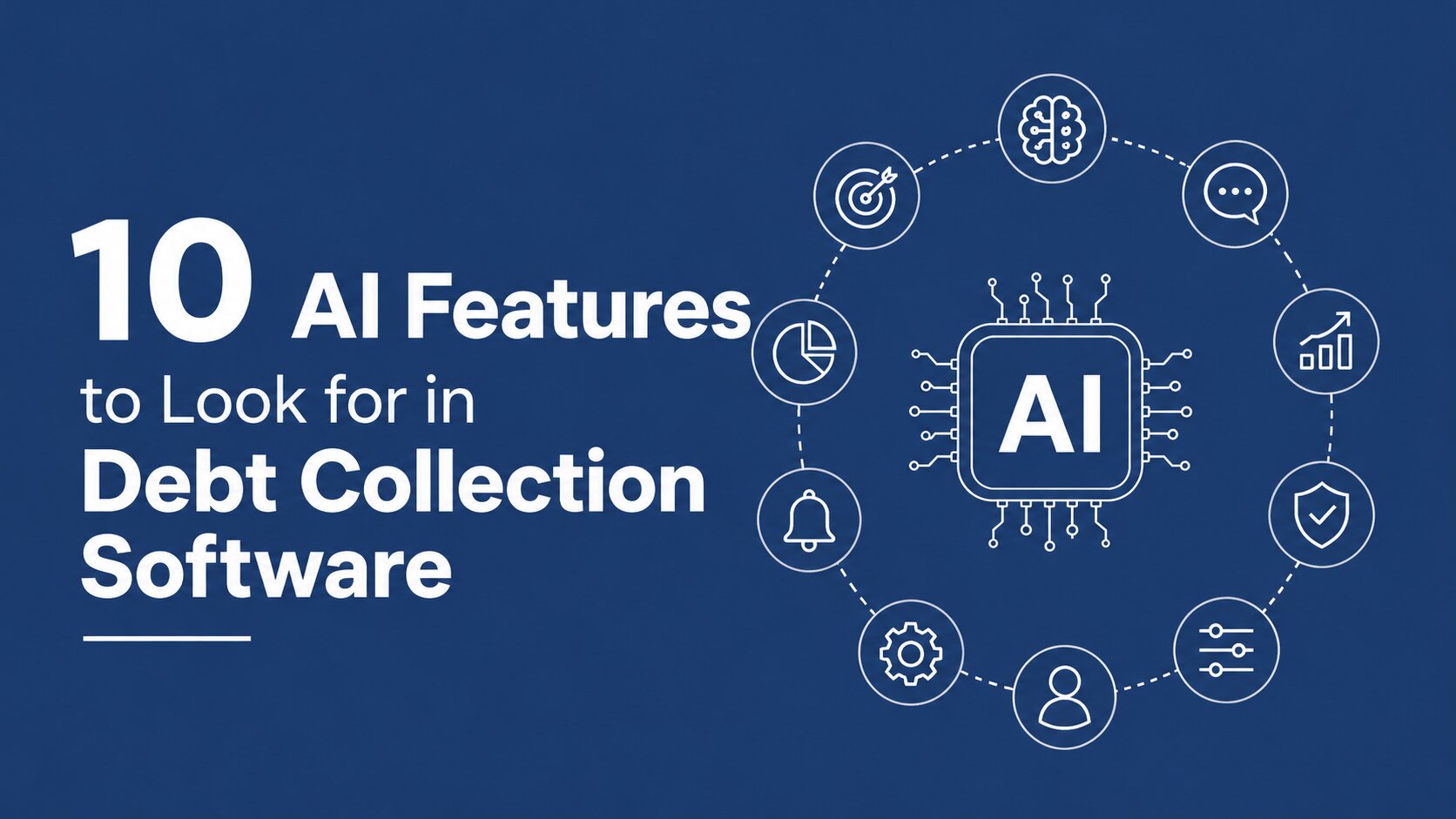
Key Features to Look for in AI Debt Collection Software in 2026
Choosing the right platform requires more than comparing pricing or feature lists. Enterprises should focus on capabilities that directly improve recovery performance.
Intelligent Account Segmentation
Not all overdue accounts carry the same level of risk.
AI-powered segmentation automatically groups customers based on factors such as:
- Payment history
- Outstanding balance
- Risk profile
- Recovery probability
This enables collection teams to focus their efforts where they are most likely to generate results.
Automated Multi-Channel Communication
Customers engage through different channels, making flexibility essential.
Modern collection software should support:
- Email reminders
- SMS notifications
- WhatsApp communication
- Scheduled calls
Automated workflows ensure timely and consistent engagement without overwhelming collection staff.
Predictive Analytics and Recovery Forecasting
One of AI's greatest strengths is its ability to forecast future outcomes.
Predictive analytics helps managers answer critical questions:
- Which accounts are likely to become delinquent?
- What recovery rates can be expected this month?
- Where are collection bottlenecks occurring?
These insights support better planning and resource allocation.
Compliance and Audit Trails
Compliance remains a critical consideration for Indian enterprises. Every interaction, communication, and account update should be recorded automatically to support transparency and accountability.
A robust platform provides:
- Secure data management
- Complete audit trails
- Communication logs
- User activity tracking
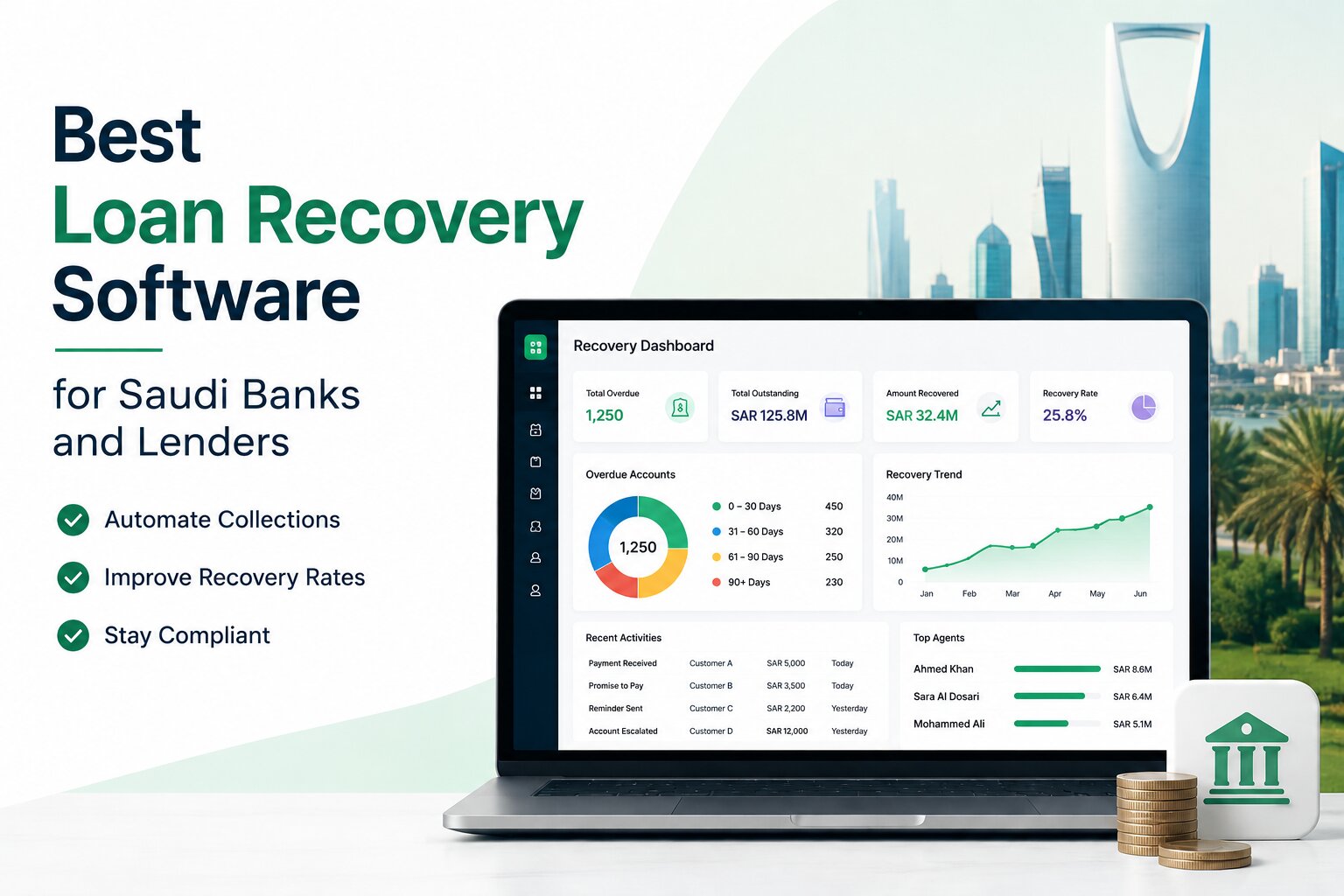
Real-Time Dashboards and Reporting
Decision-makers need visibility into collection performance.
Real-time dashboards provide insights into:
- Recovery rates
- Collector productivity
- Outstanding balances
- Ageing reports
- Collection trends
This visibility helps leadership teams make informed operational decisions.
Benefits of AI Debt Collection Software for Indian Enterprises
The value of AI extends beyond automation. It directly impacts business performance.
Faster Recovery Cycles
Automated workflows reduce delays between payment due dates and collection actions. When reminders, escalations, and follow-ups occur automatically, recovery timelines often improve significantly.
Improved Collector Productivity
Collection professionals spend less time on repetitive administrative tasks and more time resolving complex cases. This allows organisations to achieve better outcomes without proportionally increasing headcount.
Better Customer Experience
Effective collections are not just about recovering payments. Personalised communication and timely engagement help maintain positive customer relationships while encouraging repayment.
Enhanced Compliance and Risk Management
Centralised record-keeping reduces operational risks and supports regulatory compliance. Organisations gain greater confidence that collection activities are documented and consistent.
Better Cash Flow Visibility
Real-time reporting enables finance leaders to monitor recovery performance and make proactive financial decisions. Improved visibility ultimately contributes to stronger cash flow management.
Industries Benefiting Most from AI Debt Collection Software
AI-driven collections deliver value across multiple sectors.
Banking and Financial Services
Banks manage large volumes of loans and credit accounts, making intelligent recovery strategies essential.
NBFCs and Lending Institutions
Non-banking financial companies benefit from automated follow-ups and predictive risk assessments.
Telecommunications Providers
Telecom providers often manage high customer volumes and recurring billing cycles that require efficient recovery workflows.
Healthcare Organisations
Healthcare providers face increasing challenges related to unpaid invoices and payment delays.
Large B2B Enterprises
Businesses offering trade credit can improve collection efficiency while maintaining customer relationships.
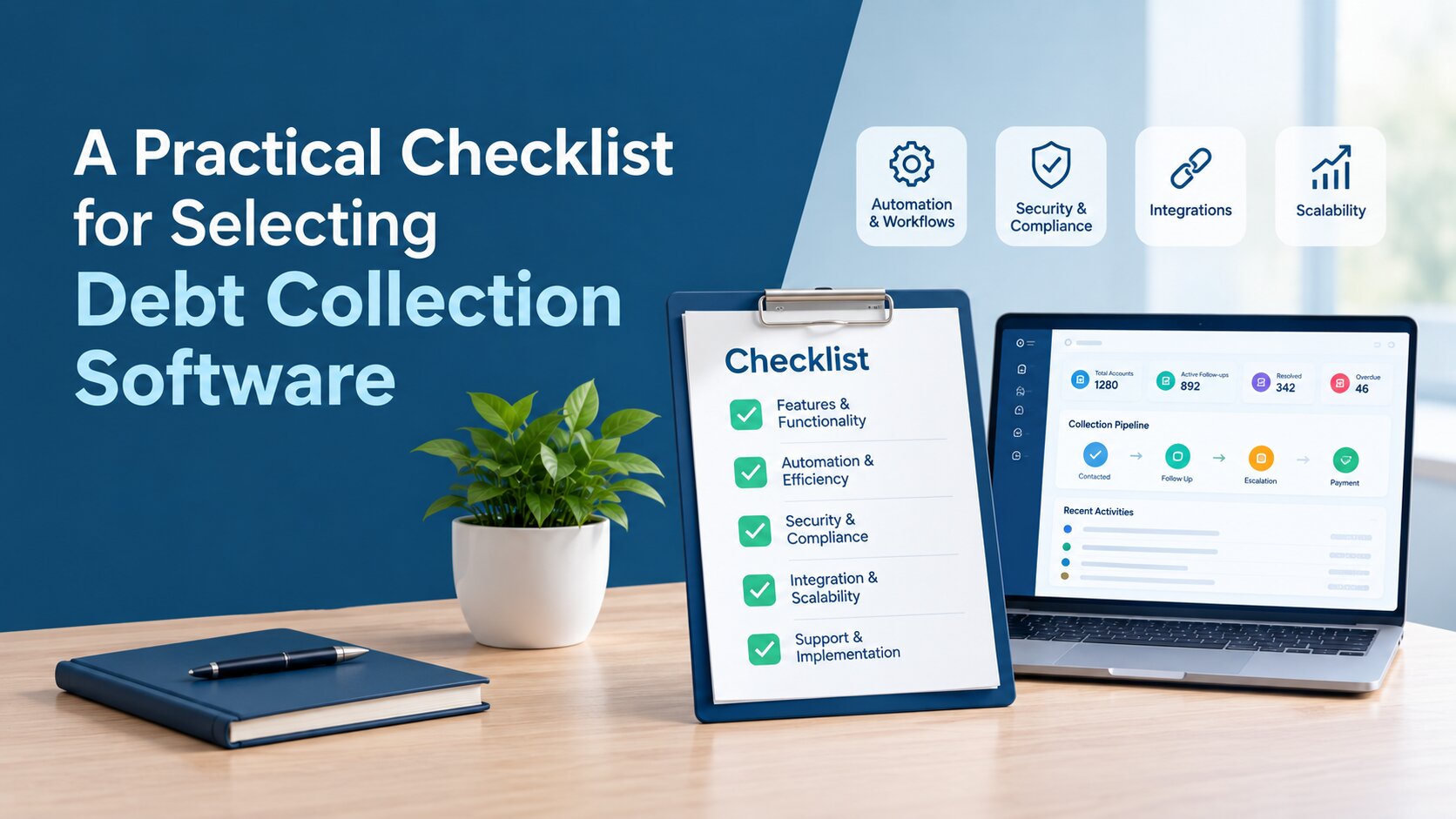
How to Evaluate the Best AI Debt Collection Software for Your Enterprise
Selecting the right solution requires a structured evaluation process.
Assess Scalability Requirements
The software should support future growth without requiring major system changes.
Review Integration Capabilities
Look for platforms that integrate with:
- ERP systems
- Accounting software
- CRM platforms
- Payment gateways
Seamless integrations reduce data silos and improve efficiency.
Evaluate AI Maturity
Many vendors claim to offer AI capabilities.
Ask practical questions:
- Does the platform provide predictive insights?
- Can it automate decision-making?
- Does it continuously improve recommendations?
Genuine AI goes beyond basic workflow automation.
Verify Security and Compliance Standards
Data security should never be an afterthought.
Ensure the platform offers:
- Role-based access controls
- Encryption
- Audit logging
- Secure cloud infrastructure
Where Smart Debt Collection Fits into Modern Recovery Workflows
As enterprises modernise recovery operations, many are looking for solutions that combine automation, visibility, and intelligent decision-making.
Smart Debt Collection helps organisations centralise collection activities, automate routine workflows, monitor recovery performance, and improve operational consistency. Rather than replacing collection teams, the platform supports them by reducing manual effort and providing actionable insights that help prioritise recovery activities more effectively.
For businesses seeking a more structured and scalable approach to collections, solutions like Smart Debt Collection demonstrate how AI and automation can work together to improve outcomes.
Emerging AI Debt Collection Trends Indian Enterprises Should Watch in 2026
Technology continues to reshape debt recovery strategies.
Predictive Collection Strategies
AI models are becoming increasingly effective at identifying payment patterns and predicting recovery outcomes.
Generative AI for Customer Communication
Organisations are beginning to use generative AI to create personalised communication while maintaining compliance standards.
Hyper-Personalised Recovery Journeys
Future collection strategies will focus on tailoring communication based on customer behaviour and preferences.
AI-Powered Collection Scoring Models
Advanced scoring systems will help teams prioritise accounts with greater accuracy.
Advanced Collection Analytics
Data-driven insights will continue to play a larger role in performance optimisation and strategic planning.
Common Mistakes Enterprises Make When Choosing Debt Collection Software
Many organisations focus on immediate requirements and overlook long-term needs.
Common mistakes include:
- Choosing solely based on price
- Ignoring integration requirements
- Underestimating compliance needs
- Selecting software that cannot scale
- Failing to consider user adoption
A successful implementation requires balancing functionality, usability, scalability, and business objectives.
Frequently Asked Questions
What is AI debt collection software?
AI debt collection software uses artificial intelligence, automation, and analytics to streamline recovery processes, prioritise accounts, automate communications, and improve collection efficiency.
How does AI improve debt recovery?
AI improves debt recovery by analysing payment behaviour, prioritising accounts, automating follow-ups, and providing predictive insights that help collection teams focus on high-value activities.
Why should Indian enterprises invest in AI debt collection software?
Indian enterprises can improve recovery rates, enhance operational efficiency, strengthen compliance, and gain better visibility into collection performance through AI-driven automation.
Is AI debt collection software compliant with Indian regulations?
Most modern platforms support compliance through audit trails, communication records, access controls, and secure data management practices. Organisations should evaluate compliance capabilities during vendor selection.
What features should enterprises prioritise when selecting debt collection software?
Key features include intelligent segmentation, workflow automation, predictive analytics, multi-channel communication, reporting dashboards, integrations, and compliance management.
How is AI debt collection software different from traditional collection systems?
Traditional systems primarily store and track information, while AI-powered platforms actively analyse data, recommend actions, automate workflows, and provide predictive insights.
Conclusion
As debt recovery becomes more complex, enterprises can no longer rely solely on manual processes and disconnected systems. The best AI debt collection software for Indian enterprises in 2026 combines automation, analytics, compliance, and visibility to create a more efficient recovery operation.
When evaluating solutions, organisations should focus on scalability, integration capabilities, intelligent automation, and long-term business value rather than simply comparing feature lists.
For enterprises looking to modernise their collections strategy, Smart Debt Collection offers a practical approach to improving recovery efficiency, reducing administrative workload, strengthening compliance, and gaining greater visibility into collection performance.
Book a personalised demo to explore how AI-powered debt collection software can help your organisation recover faster, work smarter, and support sustainable business growth.
Best ai debt collection software in India
Best debt collection software for enterprises in India
Best automated debt recovery software in India
If you need a free demo of the best AI debt collection software in India, please fill out the form below.