Measurable ROI from Accounts Receivable Management Software at a Jeddah Debt Collection Agency
Introduction
A mid-sized debt collection agency in Jeddah managed thousands of active accounts across retail, telecom, and financial services clients. Its recovery process depended on manual tracking, spreadsheet-based case assignment, and phone-heavy follow-ups. As portfolio volume grew, the agency needed a scalable, compliant way to manage receivables without expanding headcount at the same rate. This case study outlines how accounts receivable management software changed that trajectory.
The Challenge: Manual Debt Recovery Processes Limiting Growth
The agency's core issue was operational, not strategic. Its team could not process accounts fast enough to keep pace with incoming volume. Specific problems included:
- Case files scattered across spreadsheets and email threads, with no single source of truth
- No automated prioritization, so high-value or high-risk accounts received the same attention as low-priority ones
- Manual reporting that took days to compile, delaying decisions on which accounts to escalate
- Inconsistent documentation of collector-client interactions, creating compliance exposure
- Recovery rates that plateaued despite adding more collection staff
These constraints are common among agencies still relying on manual accounts receivable tracking, where missed follow-ups and inconsistent records are the norm rather than the exception. For a deeper look at how this problem shows up across industries, read this blog on how accounts receivable management systems reduce bad debt and improve collection rates.
The Solution: Beveron's Smart Debt Collection Platform
Beveron Technologies implemented its Smart Debt Collection solution, built specifically for accounts receivable management at scale. The platform replaced fragmented manual processes with a centralized, rules-driven system. Key capabilities deployed included:
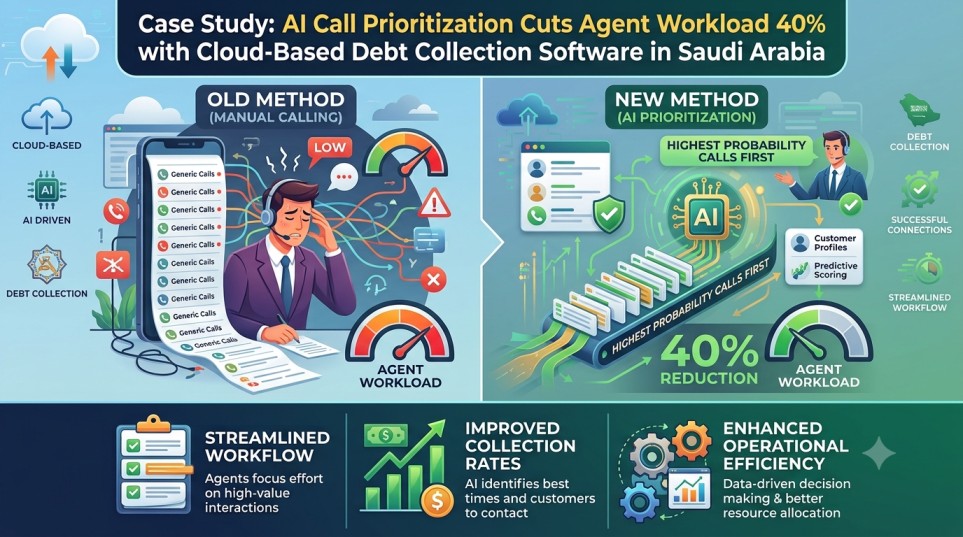
- Automated account segmentation — accounts are scored and prioritized by risk, value, and age, so collectors work the right cases first
- Centralized case management — every interaction, payment plan, and status update is logged in one system, accessible to the full team
- Automated follow-up workflows — reminders, calls, and escalations trigger automatically based on account status, reducing manual scheduling
- Real-time dashboards — recovery performance, aging balances, and collector productivity are visible instantly, without manual report compilation
- Compliance-ready audit trails — every collector action is timestamped and recorded, supporting regulatory documentation requirements
Choosing the right platform matters as much as adopting one. Explore this guide on key features to look for in an accounts receivable management system for a breakdown of the criteria that shaped this selection.
Implementation Approach
The rollout followed a phased approach designed to minimize disruption to active collections:
- Data migration — existing account records, payment histories, and case notes were consolidated and imported into the platform
- Workflow configuration — segmentation rules, escalation triggers, and follow-up sequences were configured to match the agency's existing collection policies
- Team onboarding — collectors were trained on the new dashboard and case management interface over a two-week period
- Pilot phase — a subset of accounts ran on the new system for four weeks, with performance benchmarked against the manual process
- Full deployment — following pilot results, all active accounts were migrated to the platform
The Results: Quantifiable Impact on Recovery Performance
Within six months of full deployment, the agency recorded measurable gains across recovery, efficiency, and compliance:
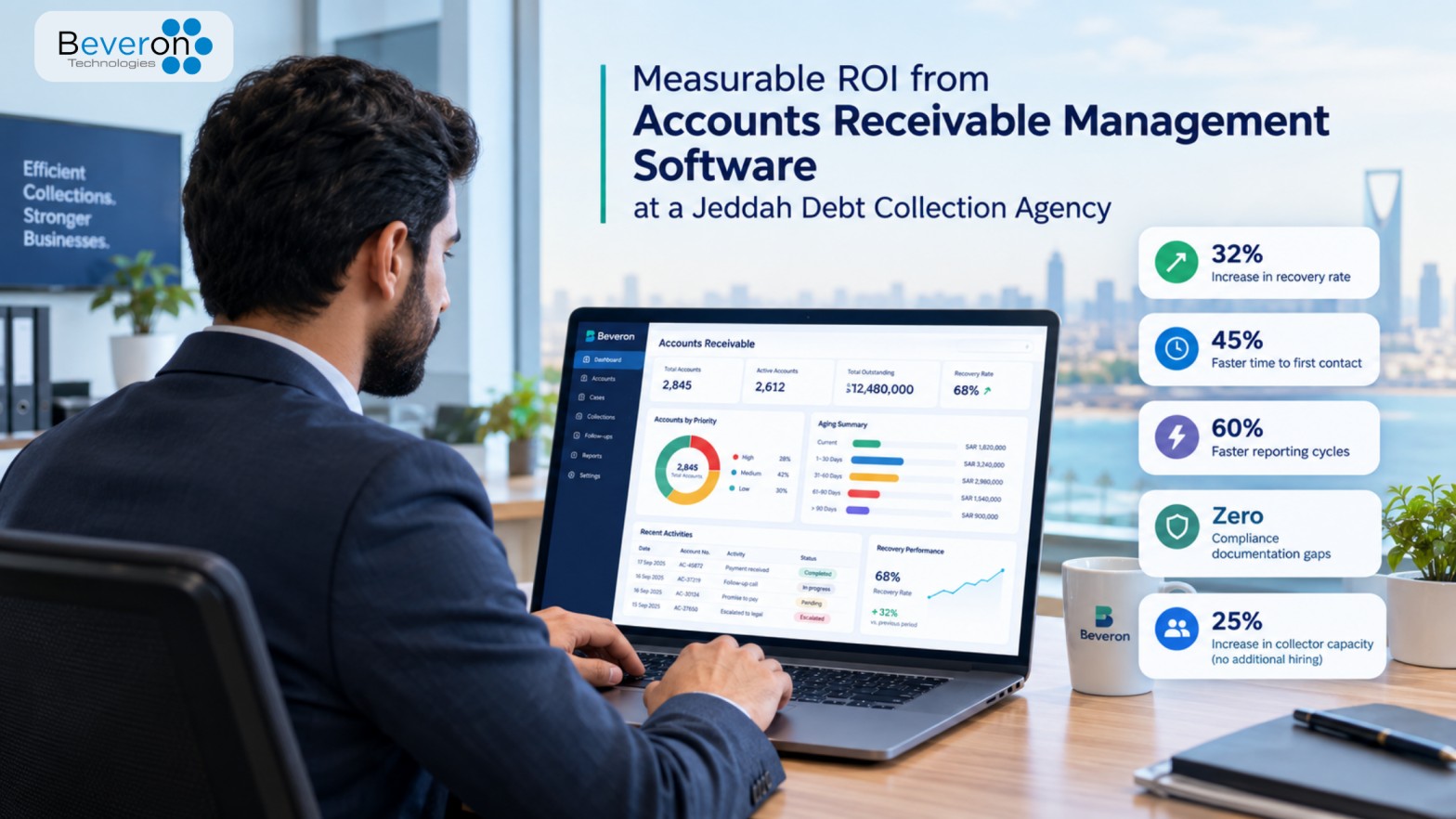
- 32% increase in overall recovery rate compared to the prior manual process
- 45% reduction in average time to first contact on new accounts
- 60% faster reporting cycles — dashboards replaced multi-day manual report compilation
- Zero compliance documentation gaps in post-implementation audits, versus recurring gaps under the manual system
- Collector capacity increased by an estimated 25% without additional hiring, due to automated prioritization and follow-ups
These outcomes reflect the operational impact of accounts receivable management software when applied to a high-volume, regulation-sensitive collections environment. Learn more about this solution on how Beveron supports debt collection agencies more broadly in how we help the debt collection sector.
Before vs. After: Accounts Receivable Management Software Implementation
Metric | Before Implementation | After Implementation | Change |
Overall recovery rate | Baseline | +32% | 32% increase |
Time to first contact | Baseline | -45% | 45% faster |
Reporting cycle time | Multi-day manual compilation | Real-time dashboards | 60% faster |
Compliance documentation gaps | Recurring gaps | Zero gaps | Fully closed |
Collector capacity (no new hires) | Baseline | +25% | 25% increase |
"We were adding people just to keep up with case volume. Once the platform automated prioritization and follow-ups, our existing team started recovering more, faster — and we finally had the data to prove it." — Operations Director, Jeddah-based debt collection agency
Frequently Asked Questions
What is accounts receivable management software?
Accounts receivable management software is a platform that automates the tracking, prioritization, and follow-up of outstanding invoices or debts, replacing manual spreadsheets and email-based processes with centralized, rules-driven workflows.
How does accounts receivable management software improve recovery rates?
It improves recovery rates by automatically segmenting accounts by risk and value, triggering timely follow-ups, and giving collectors real-time visibility into which accounts need attention first — reducing the delays common in manual processes.
How long does it take to implement accounts receivable management software at a debt collection agency?
In this case study, full implementation took place over roughly six weeks, including data migration, workflow configuration, team onboarding, and a four-week pilot phase before agency-wide rollout.
Does accounts receivable management software help with compliance?
Yes. Platforms like Beveron's Smart Debt Collection solution log every collector-client interaction with a timestamped audit trail, which supports regulatory documentation requirements and reduces compliance exposure.
What ROI can a debt collection agency expect from accounts receivable management software?
Results vary by agency size and portfolio, but this Jeddah-based agency recorded a 32% increase in recovery rate, a 45% reduction in time to first contact, and a 25% increase in collector capacity without additional hiring within six months.
Get Measurable ROI from Your Accounts Receivable Process
Manual collections processes cap how much an agency can recover, regardless of team size. Accounts receivable management software removes that ceiling by automating prioritization, follow-ups, and reporting — while keeping every action documented for compliance.
To see how Beveron's Smart Debt Collection platform can improve recovery rates and operational efficiency for your agency, visit www.beveron.com or contact the team directly at info@beveron.com.
Best accounts receivable software in Jeddah
Best cloud-based debt collection software in Saudi Arabia
Best debt collection software in Saudi Arabia
If you need a free demo on the best accounts receivable software in Jeddah, please fill out the form below.