How a Free Zone Trading Company Automated UAE VAT Compliance Using Accounts Receivable Management Software

Client Overview: UAE Free Zone Trading Company and VAT Compliance Requirements
Free zone trading companies in the UAE operate under strict VAT reporting requirements while managing high transaction volumes across multiple currencies and clients. For one Dubai-based free zone trading company, manual VAT tracking and inconsistent invoice records were creating compliance risk and slowing down collections. This case study examines how accounts receivable management software helped the company automate VAT compliance, reduce reconciliation errors, and accelerate cash collection.
The Challenge: Manual VAT Tracking in Accounts Receivable Processes
The company processed hundreds of invoices monthly across import, export, and re-export transactions, each carrying different VAT treatments. Finance teams relied on spreadsheets to calculate VAT liability, match invoices to payments, and prepare quarterly FTA (Federal Tax Authority) filings.
This manual approach created several problems:
- Inconsistent VAT calculations across invoice types (standard-rated, zero-rated, and exempt supplies)
- Delayed identification of overdue receivables due to disconnected VAT and collections records
- Increased audit risk from incomplete documentation trails
- Finance staff spending excessive hours on manual reconciliation instead of collections follow-up
As transaction volume grew, the risk of VAT misreporting and cash flow disruption increased in parallel.
The Solution: Accounts Receivable Management Software Built for UAE Compliance
The company implemented Beveron Smart Debt Collection, an accounts receivable management software platform designed to unify invoicing, VAT tracking, and collections within a single system.
Key capabilities that addressed the company's challenges included the following:
- Automated VAT classification — the system applies correct VAT treatment (standard, zero-rated, or exempt) at the invoice level, reducing manual calculation errors
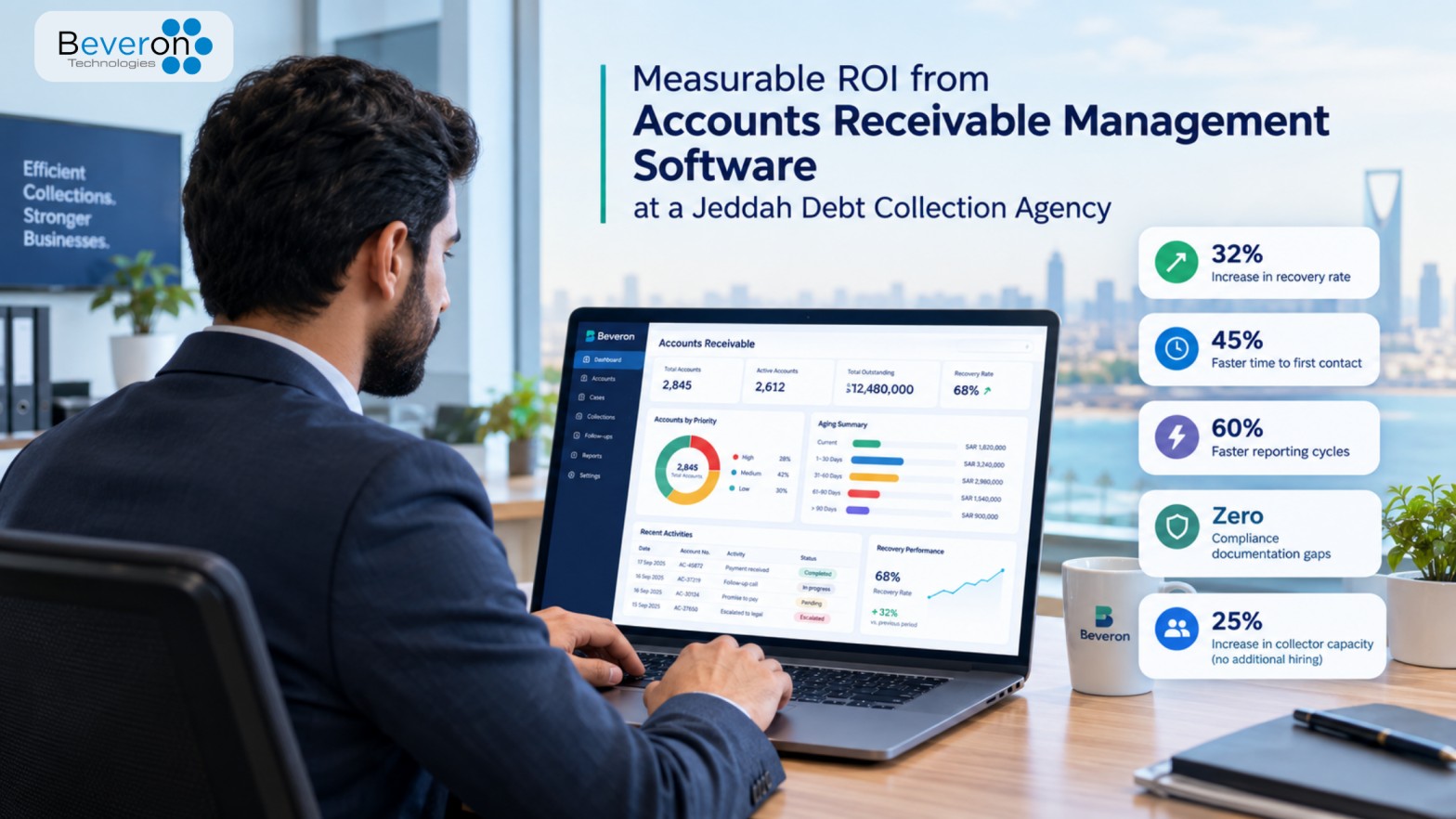
- Real-time receivables dashboard — finance teams gain visibility into outstanding invoices, VAT liability, and payment status in one view
- Audit-ready documentation — every invoice, payment, and VAT entry is logged with a traceable history, supporting FTA audit requirements
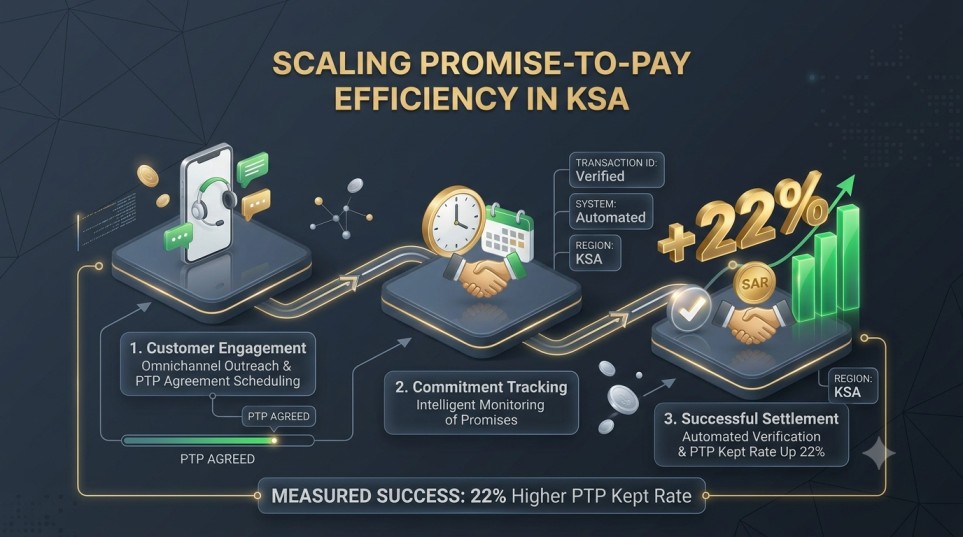
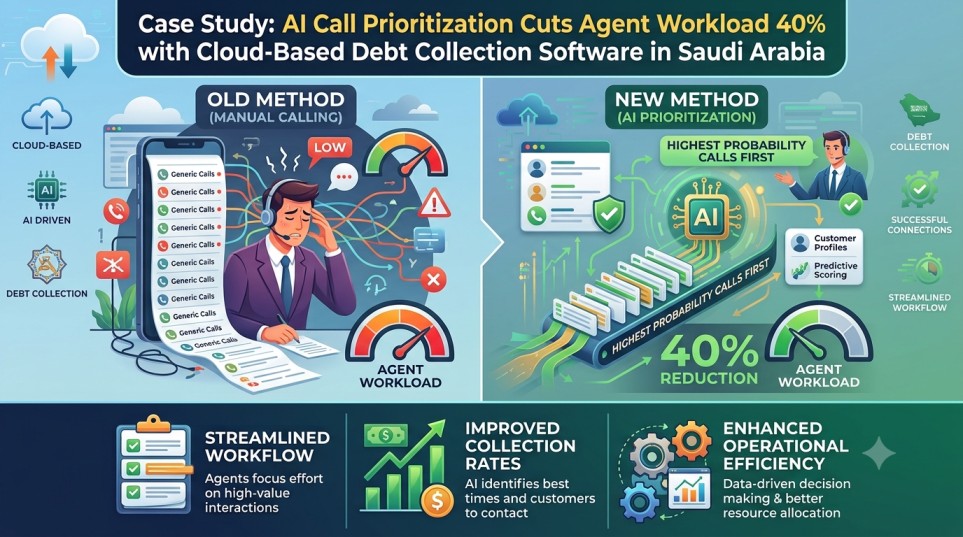
- Automated dunning workflows — overdue invoices trigger reminder sequences without manual follow-up, improving collection speed
- Multi-currency support — VAT and payment records are tracked accurately across the company's cross-border transactions
This aligns with practices covered in Beveron's guide to payment collection software in the UAE, which outlines what UAE businesses should evaluate when selecting a collections platform.
Implementation: A Phased Rollout Approach
Beveron worked with the company's finance team through a structured implementation process:
- Data migration and audit — existing invoice and VAT records were consolidated and validated for accuracy before migration
- VAT rule configuration — the system was configured to reflect the company's specific mix of standard-rated, zero-rated, and exempt transactions
- Integration with existing accounting systems — accounts receivable management software was connected to the company's ERP to maintain a single source of financial truth
- Staff training — finance and collections teams were trained on the automated dunning workflows and VAT reporting dashboard
- Parallel run and go-live — the system ran alongside manual processes for one reporting cycle before full cutover, minimizing compliance risk during transition
The Results: Measurable Compliance and Collections Improvements
Within two quarters of full implementation, the company recorded the following outcomes:
- 95% reduction in VAT calculation errors across invoice types
- 30% faster invoice-to-payment cycle through automated dunning workflows
- 100% audit-ready documentation for FTA filing requirements
- 20+ hours per month of finance staff time redirected from manual reconciliation to strategic collections work
- Zero VAT compliance penalties in subsequent reporting periods
These results reflect the kind of measurable impact also seen in comparable regional deployments, such as this case study on how accounts receivable management software helped Sudanese businesses reduce late payments.
"Automating VAT classification alongside our collections process removed a major source of manual error and gave our finance team the audit trail we needed for every filing." — Finance Director, Free Zone Trading Company
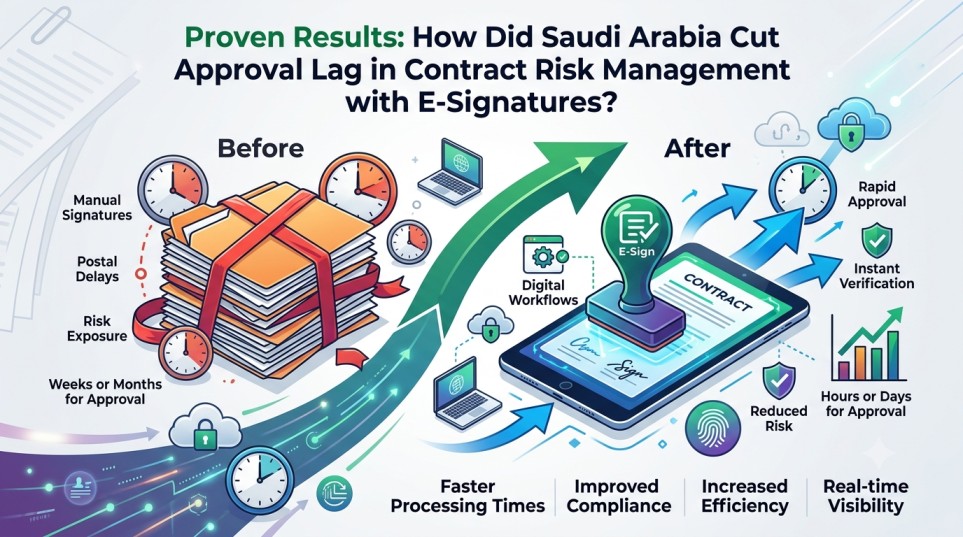
Before and After: Accounts Receivable Management Software Impact
Metric | Before Implementation | After Implementation |
VAT calculation errors | Frequent, manual spreadsheet-based | Reduced by 95% |
Invoice-to-payment cycle | Delayed, manual follow-up | 30% faster via automated dunning |
FTA audit documentation | Incomplete, scattered records | 100% audit-ready, fully traceable |
Finance staff time on reconciliation | 20+ hours/month on manual work | Redirected to strategic collections |
VAT compliance penalties | Recurring risk | Zero penalties post-implementation |
Multi-currency VAT tracking | Manual, error-prone | Automated and accurate |
Why Accounts Receivable Automation Matters for VAT Compliance
Manual VAT tracking scales poorly with transaction volume, and disconnected systems increase both compliance risk and collection delays. Accounts receivable management software addresses both problems by unifying invoicing, VAT logic, and collections into one auditable workflow. For further context on how automated systems improve collections performance, see this blog on reducing delinquency rates through smart CRMs.
Frequently Asked Questions
What is accounts receivable management software?
Accounts receivable management software is a system that automates invoicing, payment tracking, and collections follow-up, giving businesses real-time visibility into outstanding customer balances.
How does accounts receivable management software support UAE VAT compliance?
It applies correct VAT treatment at the invoice level, maintains an audit-ready record of every transaction, and consolidates VAT liability data for accurate FTA filing.
Can accounts receivable management software handle multi-currency transactions?
Yes. Platforms such as Beveron Smart Debt Collection track VAT and payment records accurately across multiple currencies, which is essential for free zone companies trading internationally.
What results can a UAE trading company expect from implementation?
Based on this case study, companies can expect reduced VAT calculation errors, faster invoice-to-payment cycles, improved audit readiness, and fewer compliance penalties within one to two reporting cycles.
Is accounts receivable management software suitable for small and mid-sized free zone businesses?
Yes. The software scales with transaction volume, making it suitable for both growing free zone companies and larger multinational trading entities operating in the UAE.
Get Started with Beveron
Free zone and mainland companies across the UAE are automating VAT compliance and accelerating collections with Beveron Smart Debt Collection. To learn how accounts receivable management software can reduce compliance risk and improve cash flow for your business, visit www.beveron.com or contact us at info@beveron.com.
Best accounts receivable management software in UAE
Best cloud-based debt collection software in UAE
Best payment collection software in UAE
If you need a free demo on the best accounts receivable management software in the UAE, please fill out the form below.